
Are charter buses safe for group travel? Yes. Bus travel is considered one of the safer forms of highway transportation due to strict regulatory compliance and rigorous vehicle maintenance. Charter buses in the United States must comply with strict safety standards regulated by the Federal Motor Carrier Safety Administration (FMCSA). These laws ensure that vehicles are rigorously maintained and operated by highly trained professionals holding a valid commercial driver’s license with a specific passenger endorsement.
This comprehensive guide is designed for travel planners, school administrators, corporate coordinators, and passengers to understand how to verify transportation safety, evaluate charter companies, and guarantee a secure journey to any destination.
Choosing a Safe Charter Bus Company
Not all operators are created equal. Charter bus companies must maintain high standards for their fleet and prioritize passenger safety through stringent regulatory compliance. Before you book, you must evaluate the company’s foundational safety infrastructure.
- USDOT and Operating Authority: Charter bus companies must have a USDOT identification number. Always require this to verify their operating authority across state lines.
- Insurance and Liability: Request current insurance and liability certificates. Carriers must maintain minimum liability insurance of $1.5 million for vehicles carrying 15 or fewer passengers (and $5 million for larger vehicles) as mandated by federal law. Watch for hidden fees that can signal a less transparent operator.
- FMCSA Safety Records: The FMCSA assigns each carrier a Safety Measurement System (SMS) score to track violations. You can search these records to verify a company’s safety profile and confirm a satisfactory safety rating status.
The FMCSA conducts compliance reviews through on-site safety audits. Vehicles or drivers violating safety rules during roadside inspections can be ordered to stop operations immediately.
Charter Buses: Equipment, Maintenance, and Technology
Buses are designed for high-occupancy transport and built to be robust. However, the mechanical integrity of the bus is non-negotiable. Modern charter buses are manufactured with built-in safety technology and emergency equipment. If you’re deciding between vehicle types for your group, our charter bus vs. sprinter van guide breaks down capacity and equipment differences.
Onboard Safety Features and Compliance
Every bus must have standard safety features. To satisfy regulatory requirements and ensure a secure trip, compliant charter buses are equipped with:
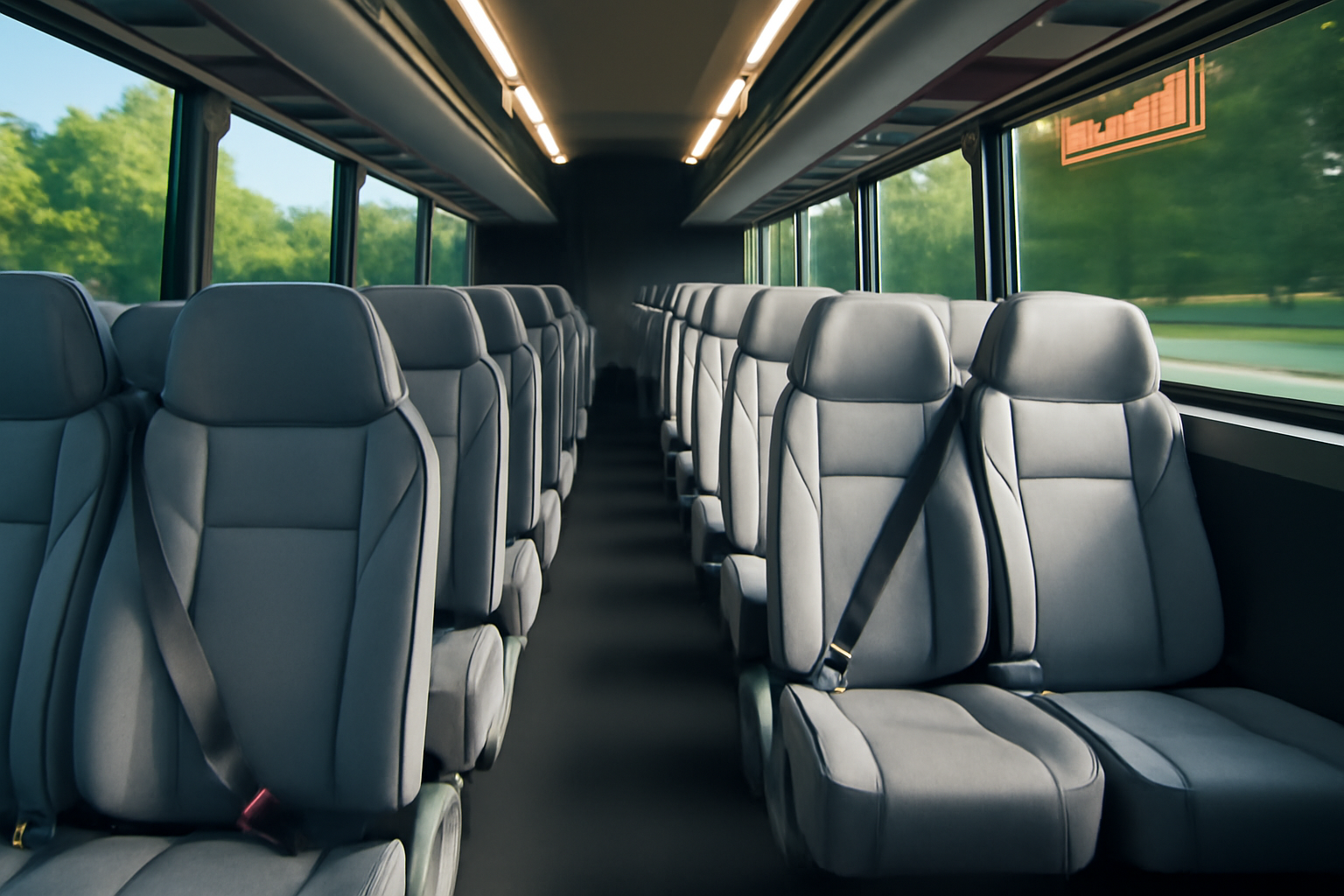
- Seat Belts: Modern charter buses often include seat belts for passengers.
- Emergency Exits: Clearly marked hatches and windows for rapid evacuation.
- Fire Extinguishers & First Aid Kits: All charter buses must have fire extinguishers and first aid kits onboard.
- Electronic Stability Control: This critical technology helps prevent bus rollovers and skids.
- Surveillance Cameras: Many charter buses are equipped with surveillance cameras for security.
- Sanitation: Federal rules don’t require an onboard restroom on every trip — carriers may instead schedule reasonable rest stops — but most standard motorcoaches include a working, clean restroom as passenger-comfort equipment, especially for longer routes.
- ADA Compliance: Buses must meet Americans with Disabilities Act requirements, including specific boarding area dimensions.
Routine Maintenance and Inspection Practices
Regular inspections prevent mechanical failures in charter buses. Safety oversight measures include:
- Annual Inspections: Charter buses must be inspected annually for safety compliance by state and federal authorities.
- Pre-Trip Inspections: Before departing, pre-trip inspections check tires, brakes, and emergency equipment. Drivers utilize a rigorous pre-trip inspection checklist.
- Maintenance Logs: Companies must keep records of corrective actions taken by certified mechanics.
Charter Bus Driver Training, Fitness, and Oversight
The drivers are the most critical safety factors on your trip. Charter bus drivers must adhere to strict regulations to prevent fatigue and ensure operational excellence.
Licensing and Medical Certification
Every person hired to operate these vehicles must hold a Commercial Driver’s License (CDL) with a specific passenger endorsement. To maintain this license, drivers undergo periodic health physicals and must pass medical exams up to every two years for medical certification.
Furthermore, ongoing training is required for charter bus drivers. They must complete specialized training beyond basic licensing to handle exclusive use scenarios and complex routes.
Fatigue Management and Substance Testing
Charter companies must adhere to FMCSA regulations for driver fatigue prevention.
- Hours-of-Service (HOS): Drivers must follow federal hours-of-service regulations to prevent fatigue. Drivers are limited to 10 hours of driving after eight consecutive hours off-duty. They may be on duty for a maximum of 15 hours per day.
- Shift Rotations: For long-distance or multi-day charters, companies typically schedule relief drivers or plan shift changes to stay within federal hours-of-service limits without disrupting your itinerary.
- Drug and Alcohol Testing: Companies must conduct pre-employment and random drug and alcohol testing for drivers and mechanics alike.
Passenger Safety Protocols and Route Planning
Passenger safety goes beyond the mechanical aspects; it involves clear communication and active participation from the group.
Onboard Protocols: Emergency procedures are explained to passengers before every trip. Passengers must wear seat belts when available and keep aisles and emergency exits clear at all times.
Health and Hygiene: Smoking is prohibited on commercial charter buses. Companies also implement strict sanitization protocols between trips.
Route Restrictions: Certain cities require buses to follow designated truck routes and avoid restricted residential streets. Planners must verify dispatch communication protocols and ensure drivers conduct documented route risk assessments prior to the journey. Once you’ve vetted a safe operator, our step-by-step booking guide and California pricing breakdown can help you plan the rest of your trip.
In the event of an accident or emergency, the company must have a written emergency response plan outlining accident reporting steps to authorities and clients.
Charter Bus Safety FAQs
How much insurance must a charter bus company carry?
Charter companies must adhere to Federal Motor Carrier Safety Regulations, which mandate maintaining a minimum liability insurance of $1.5 million for vehicles carrying 15 or fewer passengers, and $5 million for 16 or more passengers.
How many hours can a charter bus driver drive?
To prevent fatigue, FMCSA hours-of-service regulations dictate that drivers are limited to 10 hours of driving after eight consecutive hours off-duty, and they must rest for 8 consecutive hours before driving again.
Are charter buses inspected?
Yes. All charter buses undergo annual inspections for safety compliance by state and federal authorities, and drivers perform mandatory pre-trip inspections of tires, brakes, and emergency equipment before every journey.
Do charter buses have seat belts?
Modern charter buses often include seat belts for passengers, alongside other built-in safety technology like Electronic Stability Control (to prevent rollovers) and clearly marked emergency exits. Passengers must buckle up when seat belts are available.
Ready to book? Get a free quote at allstarshuttles.com or call +1 (858) 400-0476.